

Catamarans Can Fly!
Sectors
Sectors
27.07.2023 – Aluminium Association (Petr Likholitov)
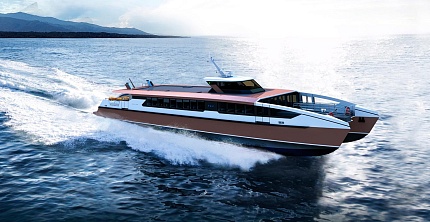
Unique to Russian shipbuilding, hydrofoil catamarans are being built at the shipyard of the East Siberian River Shipping Company in Irkutsk. The HSC150B project combines the speed and efficiency of hydrofoil vessels with the lifting capacity and shallow draft of catamarans. Aluminium components make up approximately half the weight of each of these innovative vessels.
The HSC150B project is the brainchild of Sea Tech, a Nizhny Novgorod company. The hulls of the catamarans were laid last year at the Vympel shipyard in Rybinsk. Full assembly is taking place at the industrial site of the East Siberian River Shipping Company.
The HSC150B passenger catamaran specifications are as follows
Length: 38m
Width: 11m
Hull height: 3.5m
Draft (design waterline): 0.9m
Main engines: 2x1400 kW
Design speed: approximately 60 km/h
Crew: 4
Range: 700 km
Passenger capacity: 148 people
 At the Irkutsk shipyard, the vessels will be fitted with advanced navigation systems, engines and other components, and then completed. The shipbuilders of the East Siberian River Shipping Company will launch the vessel at their shipyard.
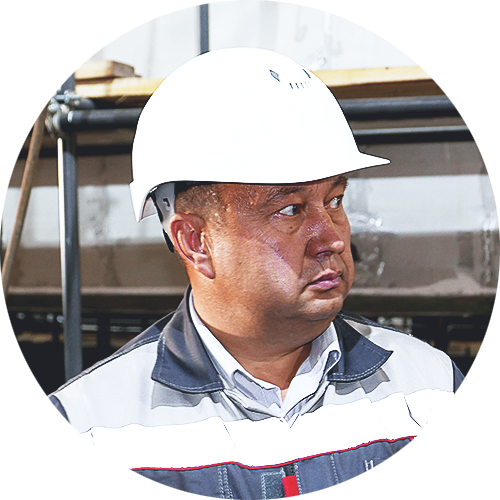
“The hulls are currently 97% complete. "We will soon begin the installation of the ship equipment and systems”, says Sergey Koshkin, Deputy Head of Shipbuilding, East Siberian River Shipping Company.
THE TIME OF PIONEERS
The Sarma and Selenga are the lead vessels of the HSC150B project, and they are unique in Russia. The hull type is particularly unique: it is hysucat, which stands for HYdrofoil SUpported CATamaran. According to the shipbuilders, this is not a displacement, but a skimming vessel. Thanks to the hydrofoils in the bow and stern, and two powerful 1400 hp engines, the "winged" catamaran can reach impressive speeds of about 60 km/h (or 32 knots). In terms of speed, the HSC150B project vessel is on par with other hydrofoils and high-speed catamarans.
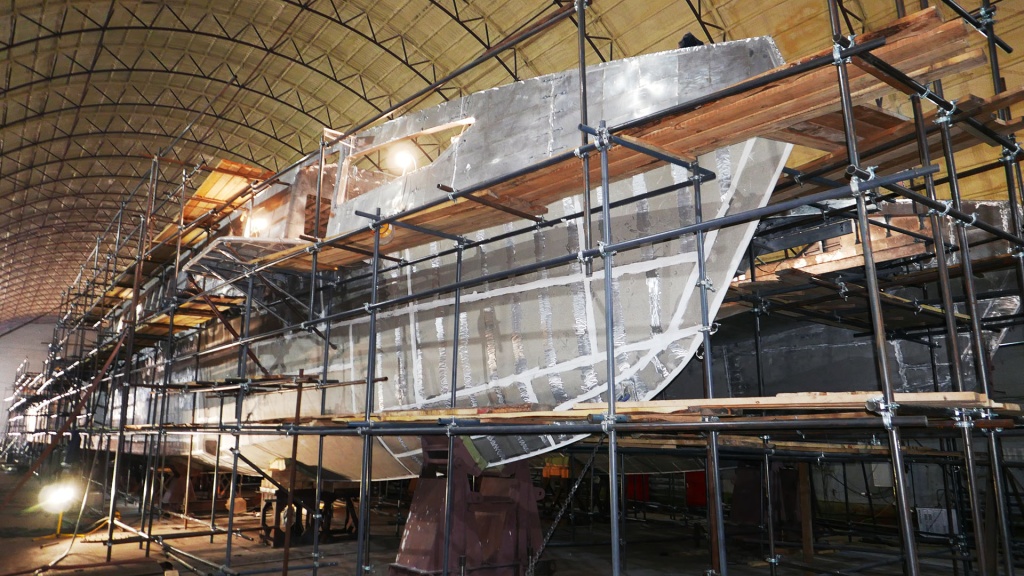
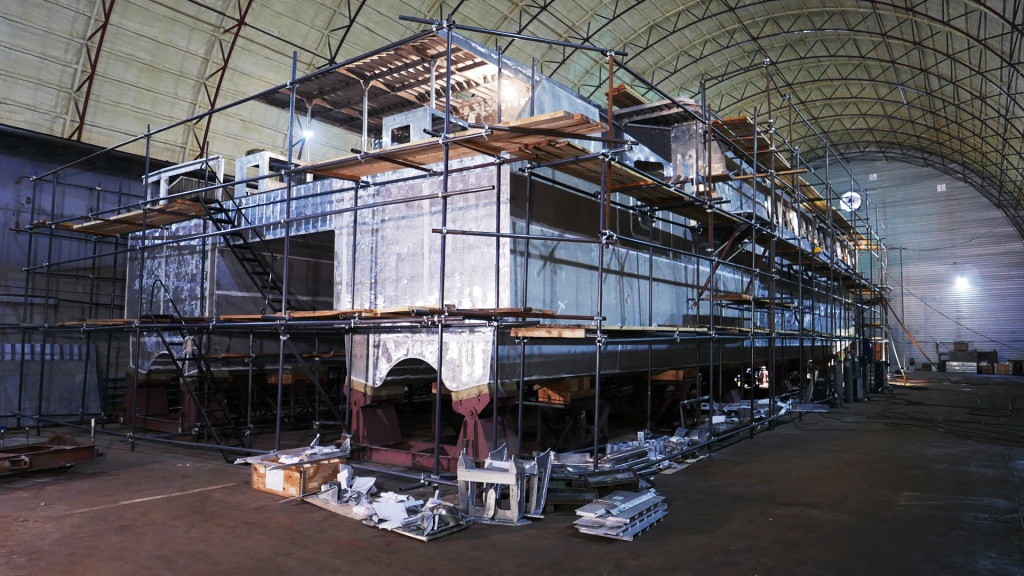
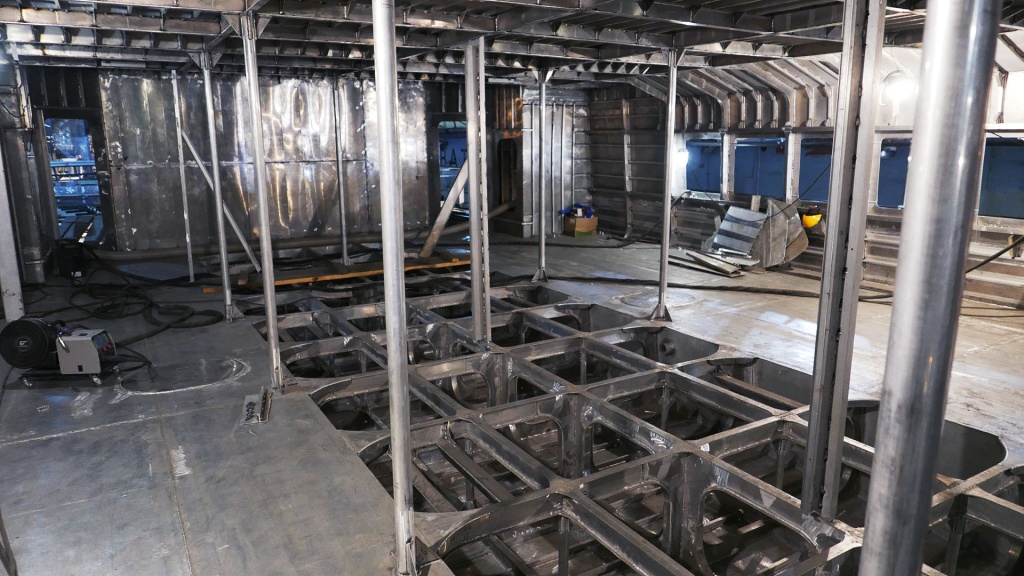
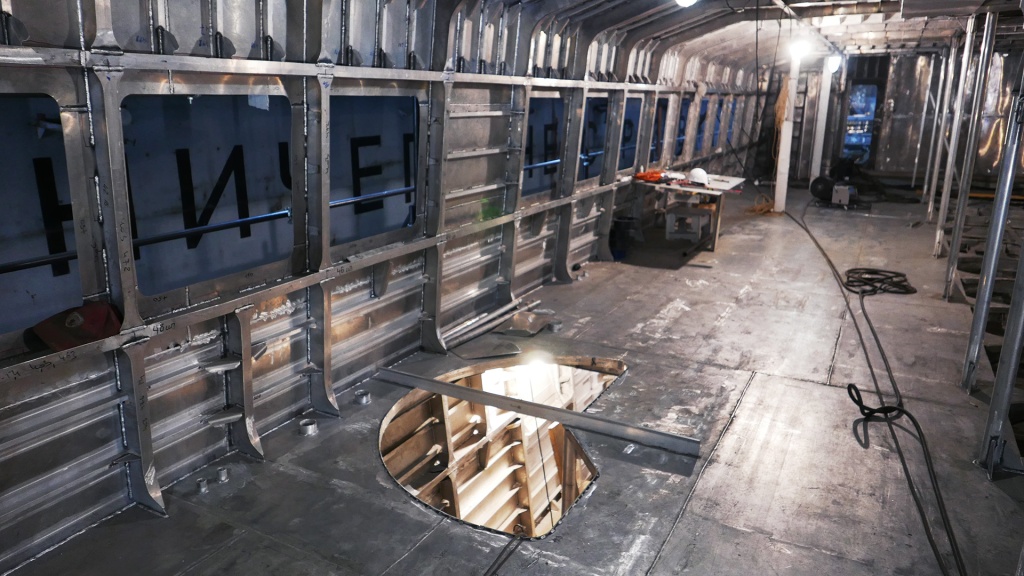
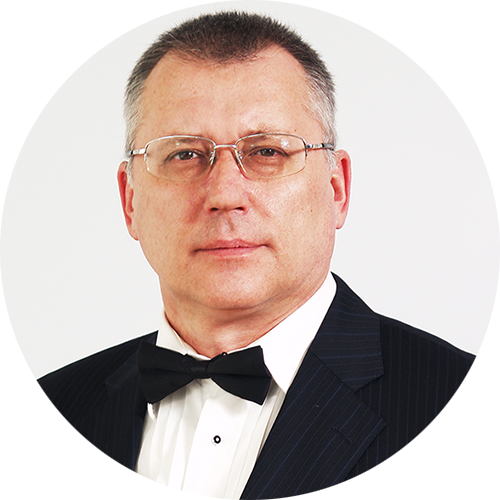 It is worth noting that these impressive characteristics are achieved through the extensive use of aluminium. "Aluminium is the preferred material for high-speed vehicles, whether it is an aircraft, train, car, or ship," explains Pyotr Yezhov, CEO, Sea Tech. "Actually, for high-speed vessels, it’s the only choice. Titanium is expensive and challenging, and composites have regulatory limitations. For a high-speed vessel, as with other vehicles, the main consideration is weight. The heavier the hull, the less payload and fuel it can carry. One of the advantages of aluminium is its resistance to corrosion in fresh water. Consequently, there is no need to add corrosion allowances”.
Pyotr Yezhov, CEO of Sea Tech, states:
"Aluminium is the preferred material for high-speed vehicles, whether it is an aircraft, train, car, or ship.
As Sergey Koshkin points out, the weight of the vessels currently under construction at the Irkutsk shipyard has been reduced “thanks to a fully aluminium hull and the use of aluminium in the majority of components and assemblies, up to valves to gates”.
Another innovation has helped to shed excess weight. For the first time in Russian shipbuilding, the Sea Tech designers have used large, lightweight welded panels (SKO panels) and a new alloy, 1581, developed by the Institute of Light Materials and Technologies. This approach has allowed the catamaran’s superstructure to be lightened by 7.2% compared to standard extruded large panels made from the 1561 alloy.
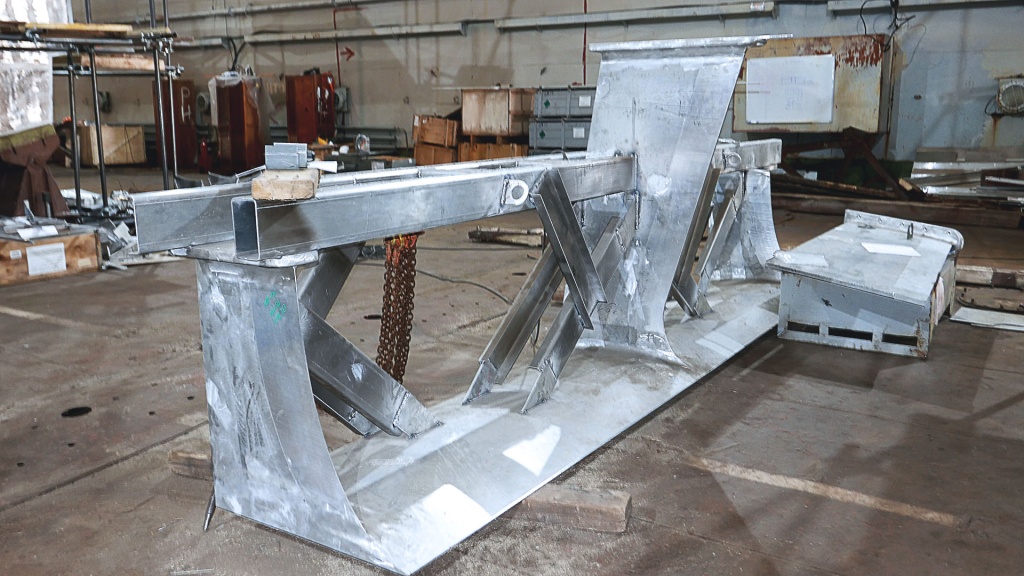
“The weldable 1581 alloy slightly outperforms the conventional 1561 alloy in terms of strength. This allows for a reduction in the weight of both the main and secondary structures. Furthermore, the 1581 alloy is more readily available on the market and simply more advanced", comments Pyotr Yezhov.
HOVERING OVER LAKE BAIKAL
The main advantages of the HSC150B hydrofoil catamarans are their efficiency, reduced wave making, and smooth ride. They are designed as high-speed passenger transport for river routes, lakes, and M-category reservoirs according to the Russian River Register. The East Siberian River Shipping Company, part of Eastland Group and the largest tourist operator in Eastern Siberia, plans to operate these innovative vessels on Lake Baikal. Given their speed capabilities, they will be able to cross the planet’s largest freshwater lake at its widest point in just over an hour.
The HSC150B project vessels are named Sarma and Selenga after the winds and rivers of Lake Baikal.
In the flooded berth of the Irkutsk shipyard, the Sarma and Selenga catamarans are positioned stern to stern. Up close, their size is particularly striking: each one is 38 metres long and 11 metres wide. Despite their impressive dimensions, each catamaran has a draught of less than a metre: 90 cm. Thanks to their shallow draught, the HSC150B vessels can get as close to the shore as possible and disembark passengers onto the Baikal coast, which lacks waterfront structures. For this purpose, there is a gangway in the bow. Those who have visited Lake Baikal on a tourist trip will appreciate this feature: the most remote and picturesque bays of Baikal are very remote, lack berths, and even in popular coastal villages like Listvyanka, the waterfront infrastructure needs improvement, to put it mildly.
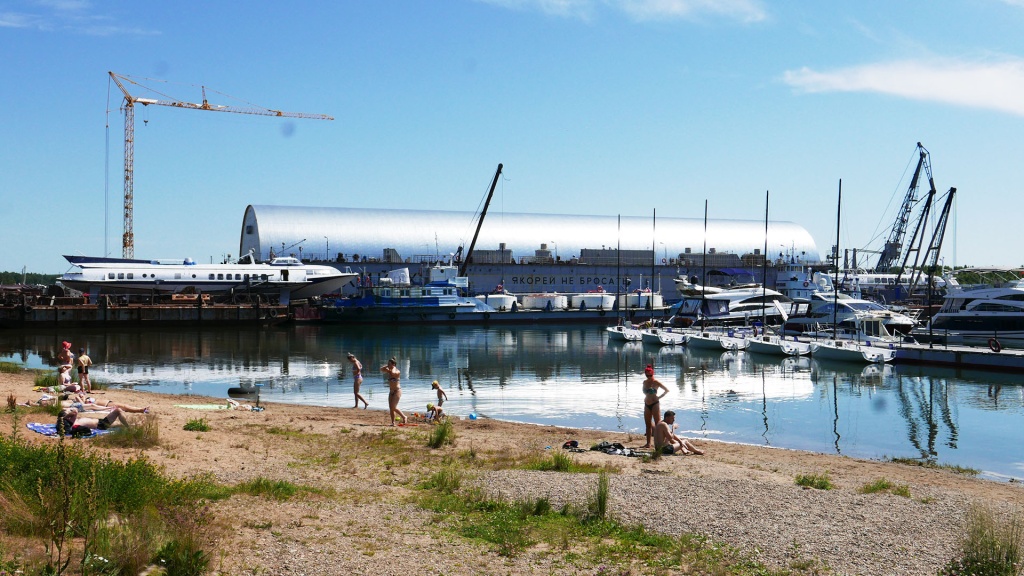
It’s still unclear which of the two vessels in the berth will be named Sarma and which Selenga. However, shortly, engines and hydrofoils will be installed. The components have already been delivered.
“In October, we plan to launch the first catamaran and let it hover. The berth will be flooded and the vessels will be afloat for the first time. Sea trials are also scheduled for this time", says Sergey Koshkin.
It is worth noting that the sea and mooring trials of the HSC150B hydrofoil catamarans will be witnessed by the Russian River Register inspectors.
Designer: Sea Tech (2021 — 2022)
Concept: Gunther Migeotte (Icarus Marine), P.V. Yezhov
Exterior design: N.Yu. Tseloukhov (Sea Tech design studio)
Chief Designer: R.M. Prostotin
Customer: East Siberian River Shipping Company
Shipyards: Vympel ( Rybinsk), Irkutsk Fleet Base (2022 — 2023)